Quick answer by project type
When in doubt, go with a 20 yard dumpster. It handles multi-room renovations, roofing tear-offs, landscaping and yard cleanups, and estate and foreclosure cleanouts, and it is the size we point most whole-house cleanouts toward. Go 10 yard for a bathroom remodel, a garage or attic cleanout, a modest pile of yard debris or a minor roofing job. Go 15 yard for a medium renovation, deck removal, flooring and carpet, or a single-room remodel. Go 30 yard for new home builds, demolitions, full-house cleanouts and commercial remodeling, and 40 yard for commercial construction and demolition, multi-unit projects and large-scale cleanouts.
A kitchen remodel can land in a 10, 15 or 20 depending on how much comes out — cabinets and counters only, or the flooring and a wall as well. A roof replacement of about 2,000 square feet usually fits a 15. Not sure? Call (417) 720-8150, tell us the job, and we size it for you.
The five sizes side by side
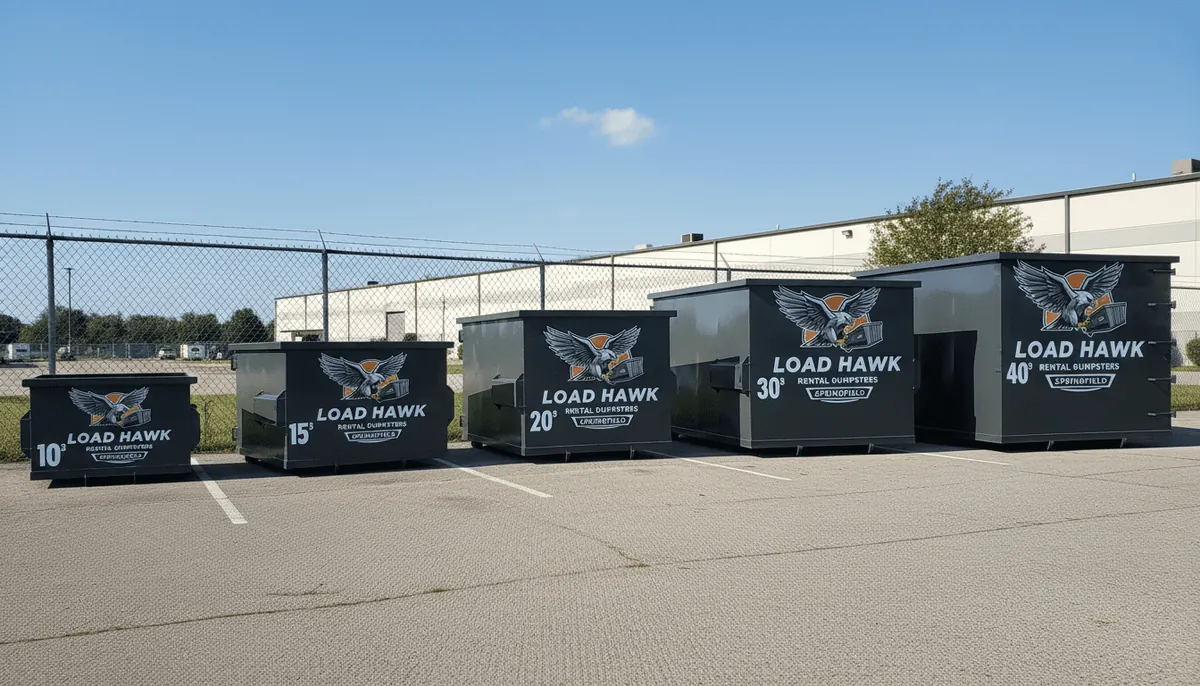
All five are open-top roll-offs about 8 feet wide. The 10 and 15 are shorter boxes; the 20, 30 and 40 share a 22-foot footprint and simply get taller. Pickup-truck loads are a rough guide to volume. The weight column is the allowance included in the flat rate, and it depends on the material.
"Measure twice, rent once" is how we put it. Renting too small means overflow or a second haul; going too big means paying for unused space.
Check the weight, not just the volume
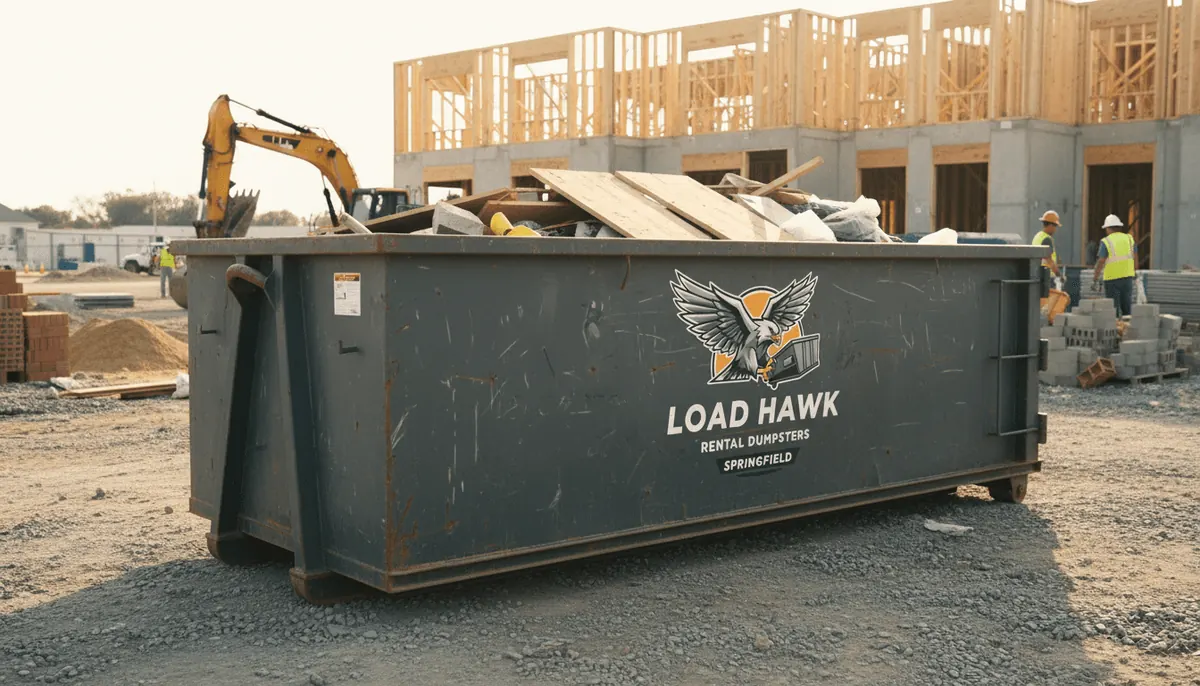
Volume and weight are two separate limits. Heavy materials like concrete, shingles, tile, brick or dirt fill a dumpster's weight limit long before it looks full, so a smaller container is often the better and cheaper choice for dense loads. Bulkier, lighter items like furniture and packaging call for more cubic yards. Concrete, brick and asphalt go in limited loads, and it is best to keep them separate from light debris so neither load runs into its limit. Stay under the allowance and the flat rate covers it; go over and there may be an overage — we help you plan for it up front.
Weight is also what the disposal side charges for. The City of Springfield's Noble Hill Sanitary Landfill posts one rate — $43.85 a ton, $20 minimum — for household trash, construction and demolition waste and clean fill alike. A ton of broken patio costs the same to tip as a ton of anything else. Missouri law calls uncontaminated soil, rock, sand, gravel, concrete, asphaltic concrete, cinderblocks and brick "clean fill", and MoDNR says clean fill from a demolition "may be used as fill on-site, with the permission of the property owner."
There is a height limit too. Keep all debris level with or below the top rim: an overfilled dumpster cannot be safely transported. If you need more room, call and we swap it for an empty one.
Measure the drop spot
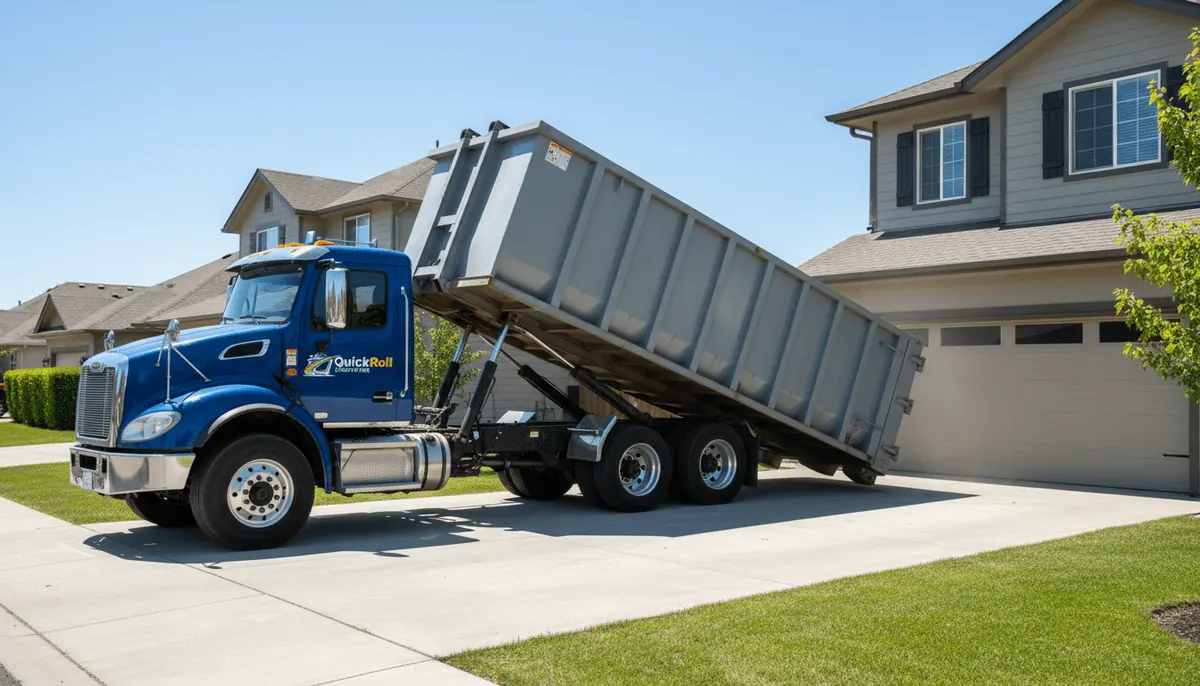
Allow about 22 feet of length for a 20, 30 or 40 yard box, about 14 feet for a 15 and about 12 feet for a 10, all roughly 8 feet wide, plus room for the truck to line up. The 10 fits neatly in most driveways. Our drivers put boards or protective pads under the wheels to prevent scratches, and we recommend not moving the dumpster once it is set down — call us if it needs to move.
Keep it on private property where you can. We found no City of Springfield rule written for a roll-off on a private driveway. The street is another matter: City Code Sec. 98-1 bars any obstruction in the public way that hinders traffic or drainage, so check with the City's Traffic Operations (417-864-1980) before a street drop. Some towns around us are stricter — Battlefield wants a free City permit for any dumpster visible from the property line, and Ash Grove's code does not allow obstructions on the street. The town-by-town permit guide covers all 15 places we serve.
Why the weekly cart will not do it
Springfield does not run its own trash pickup. More than 10 private, licensed haulers provide curbside service, and residents pick their own. The City's container rules (Sec. 94-72) leave out "bulky rubbish, yard waste, and demolition and construction waste" — those are not cart material.
The neighbors are similar. In Nixa, the City's contractor Republic Services takes one large item a week at the curb, and its list of what it will not take includes "Construction projects / fence / carpet / decks", "Rocks / bricks / concrete", appliances, tires and brush. In Sparta, GFL's service is "GFL Cart only; bags, boxes, and customer owned containers will not be picked up." A deck tear-out or a garage of junk is weeks of that — a roll-off is for the pile that is bigger, heavier or sooner than the cart allows.
Five ways to get the size right
- Tell us the materials. Shingles, tile and concrete change the answer more than square footage does.
- Keep heavy debris separate. Concrete or roofing in its own smaller box stays inside the weight allowance.
- Keep yard waste apart. Missouri has banned yard waste from landfills since 1992 — see the fall cleanup guide.
- Stage the pile first. Have debris ready before delivery so you use the whole rental period.
- Call early. Call before noon and we can usually have a truck on site within hours.
If the job mixes a slab, a roof and a kitchen, say so — we size for the weight, not the look of the pile.